Thick-Skinned Rhinoplasty and CO2 Laser
If you are researching rhinoplasty and have heard doctors say "your skin is too thick, your nose might not get as small as you want," you are not alone. A thick-skinned and oily nose structure is one of the most common patient profiles we encounter, especially in Turkey, the Middle East, and the Mediterranean region.
Here is everything you need to know about thick-skinned rhinoplasty and why this innovative combination attracts patients from all over the world...
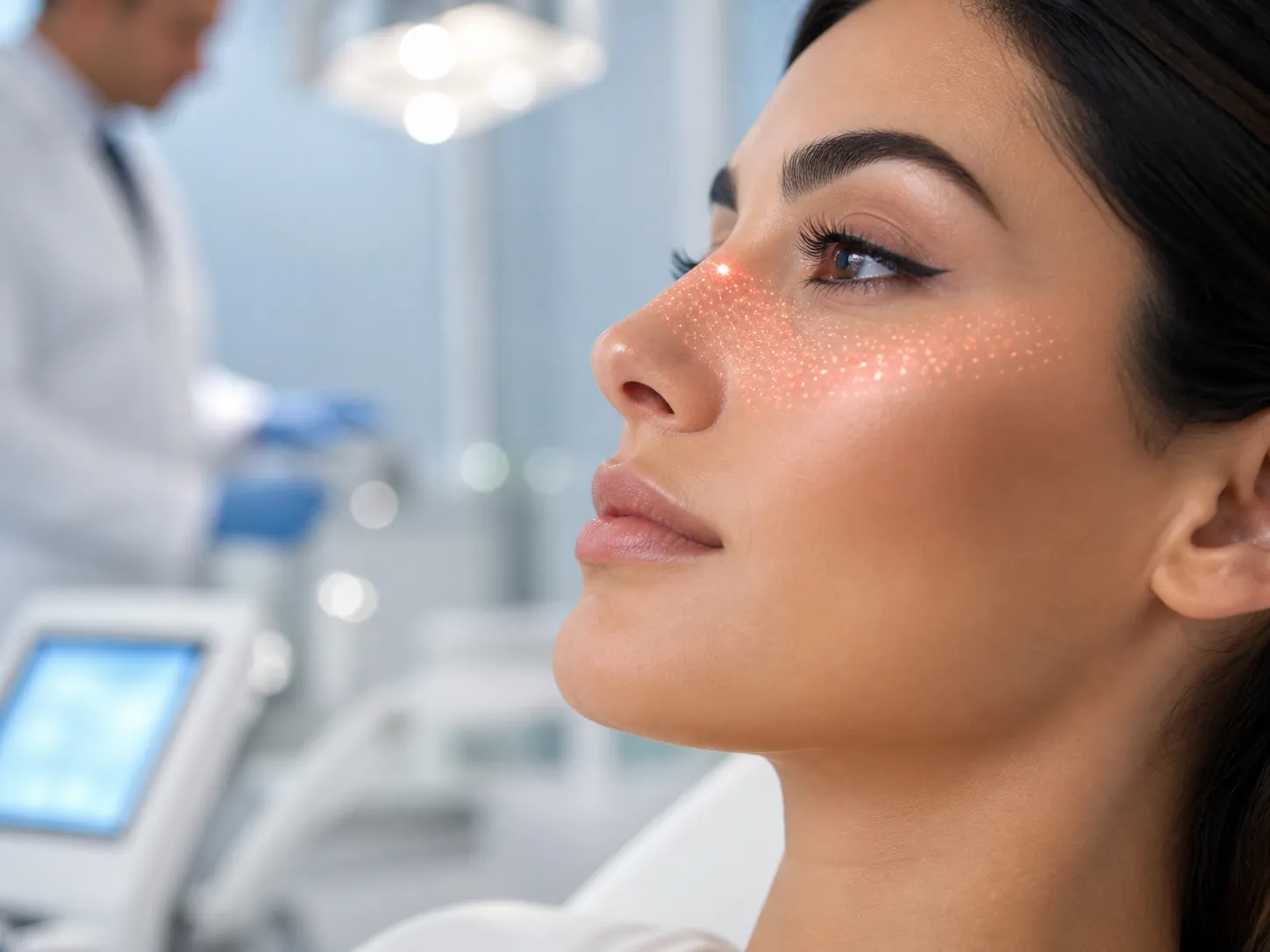
Thick-skinned noses have characteristic features: The nasal tip is generally round and bulky (a bulbous tip), the skin is oily, the pores are large, and the cartilage structure is usually weak.
Imagine the situation like this: If you lay a thin, silk sheet over your bed, you can clearly see all the contours underneath and the shape of the pillows (Thin-skinned nose). However, if you lay a thick, wool quilt (blanket) over the same bed, you will not be able to see any of the details underneath.
This is the fundamental problem experienced in thick-skinned rhinoplasty. Even if the surgeon flawlessly sculpts the cartilage and bone inside like a sculptor, the thick and oily skin covers up this elegant craftsmanship. It makes the nose look larger and rounder than it is. Furthermore, thick skin holds post-operative edema (swelling) like a sponge, prolonging the recovery process.
In the past, surgeons only dealt with the cartilage and bone inside. However, in Dr. Celal Alioglu’s "Holistic Rhinoplasty" approach, the quality of the "fabric" covering the skeleton, namely the skin, is also addressed during the same surgery.
So how does this work?
While you are having your rhinoplasty surgery under general anesthesia, as soon as the cartilage and bone sculpting is finished, a Fractional Carbon Dioxide (CO2) Laser is applied to the surface of your nose and your cheeks.
Thinning the thick skin from the outside with a laser is only one dimension of the job. The cartilage craftsmanship inside must also be completely different from that of thin-skinned patients. Dr. Celal Alioglu applies these special surgical principles in thick-skinned patients:
If you reduce a thick-skinned nose too much, the skin cannot adapt to that new, smaller skeleton and collapses like an empty tent (this is called "dead space" or "pollybeak deformity"). Therefore, the goal is not to aggressively carve out the nose; it is to strengthen the skeleton with your own cartilages (or rib cartilage) and push the skin forward by supporting the nasal tip. The sturdier the tent pole, the better the thick canvas (skin) on top will stand.
To eliminate the "bulbous nose" appearance, the cartilages at the nasal tip are narrowed with special sutures, and a fine, elegant reflection point (tip defining point) is provided to the nasal tip using cartilage grafts (supports).
When it comes to thick-skinned rhinoplasty, the most important thing required of patients is patience.
While the nose of a thin-skinned patient largely takes its shape by the 6th month, in thick-skinned patients, it can take 1.5 to 2 years for the edema to completely subside and the nose to achieve its final shape (elegant, sharp contours).
During this process, the thick skin protocol applied by Dr. Celal Alioglu is as follows:
Many patients of Middle Eastern, Mediterranean, or Caucasian descent were led to believe for years that they could not achieve the elegant nose they dreamed of due to their thick skin structure. However, thanks to modern structural rhinoplasty techniques and the synergy created by the CO2 Laser Combination, thick, oily, and porous noses can now turn into smooth, elegant masterpieces that perfectly harmonize with your face.
If you have been hesitant about rhinoplasty because you have "thick skin," you can contact Dr. Celal Alioglu's clinic to get detailed information about this special holistic surgical approach.
Here is the FAQ section you can add to the end of the article, containing the topics patients wonder about the most:
The biggest misconception in thick-skinned patients is that the nose can be made "tiny." If the skeleton is reduced too much, the thick skin cannot adapt to this new skeleton and collapses like an empty tent. Our goal is not to aggressively reduce the nose; it is to resize the nose with strong cartilage supports, clarify the contours, and provide the most suitable natural balance for your face.
Thick skin tends to hold post-operative fluids and edema like a sponge. While the shape of the nose largely settles by the 6th month in a thin-skinned patient, this process can take 1.5 to 2 years to complete in thick-skinned patients. Doing the massages recommended by your doctor and being patient are the most important keys during this period.
No, on the contrary, it makes the process much more practical for you. Since the laser procedure is performed under general anesthesia, you will not feel any pain. During the 1-week period you rest at home with the splint and tapes on your nose, the skin renewal (peeling) created by the laser also occurs. This means recovery times overlap (downtime stacking) and you do not experience any extra loss of time.
Although it is not always mandatory, it is a method we frequently use in thick-skinned patients. A very strong cartilage support (tent pole) is needed to hold up thick and heavy skin and to create an elegant nasal tip. If the nose's own internal cartilage (septum) is weak or insufficient, using rib cartilage is the most reliable way to prevent long-term collapse and sagging.
These medications, which shrink the sebaceous glands and slightly thin the skin, can improve skin quality in thick-skinned patients. However, because they directly affect wound healing, they cannot be used randomly. Depending on the medication usage, the CO2 Laser application may need to be postponed. When to stop these medications or when and at what dose to start them after surgery must absolutely be determined by a joint decision between your surgeon and your dermatologist.

Dr. Celal Alioğlu is a European board-certified specialist in plastic, reconstructive, and aesthetic surgery. Based in Istanbul, he combines international surgical standards with a refined, patient-centered approach for both local and international patients.
With memberships in leading global medical organizations and a commitment to continuous professional development, Dr. Alioğlu provides safe, ethical, and personalized surgical care.
More About Dr. Celal +