Facelift Technique vs Surgeon Experience: Does the Technique Really Matter?
In facelift surgery, are the results truly dependent on the technique, or is the surgeon’s approach more decisive? In recent years, this question has been asked more frequently, especially with the growing popularity of the “deep plane facelift” technique.

When facelift surgery is considered, one of the most common questions patients ask is, “Which technique is better?” Yes, technique selection does affect the outcome, because each technique works on different layers of the face and targets different problems.
However, the name of the technique alone does not guarantee the result. The most important factors determining the outcome are the patient’s facial anatomy, the type of aging (sagging vs. volume loss), skin quality, and how well the surgeon applies the chosen technique. A popular approach may fail to deliver the expected result if used on the wrong patient or performed without sufficient experience.
Today, facelift techniques can broadly be considered as “SMAS-based” approaches and “deeper-plane” approaches. The most commonly used and well-accepted techniques include:
• SMAS plication
• High SMAS (Hi-SMAS)
• MACS lift
• Deep plane facelift
Each of these techniques offers different advantages depending on the degree of sagging, the need for midface support, scar planning, and how the tissues are repositioned. It is not correct to say that one single technique is suitable for everyone.
SMAS plication is based on tightening the superficial musculoaponeurotic system (SMAS) by folding it without cutting. It can be a good option for patients with more limited sagging, especially when mild laxity is present in the lower face and jawline.
Its main advantage is achieving a natural tightening effect with more limited tissue manipulation. However, in patients with significant midface descent, its effect may be limited. Therefore, proper patient selection is essential.
In the High SMAS (Hi-SMAS) technique, the SMAS layer is addressed at a higher level and repositioned accordingly. This approach can contribute not only to the lower face but also to the midface to a certain extent.
Hi-SMAS can provide a stronger lifting effect and more balanced facial proportions in appropriately selected patients. However, it requires more advanced surgical planning and experience. The goal is never “more pulling,” but rather a lift that respects the natural facial anatomy.
The MACS lift (Minimal Access Cranial Suspension) is a facelift technique performed through shorter incisions and based on vertical suspension of the tissues. It may be preferred for patients with early to moderate sagging.
Its advantages include a more limited surgical field and, for many patients, a faster return to social activities. However, in cases of advanced tissue descent, it may be insufficient when used alone. Therefore, it should be planned based on actual need rather than promises of “quick recovery.”
The deep plane facelift is an approach that works on deeper anatomical planes compared to other facelift techniques. In this method, the skin and SMAS are released in the deep plane and repositioned together as a single unit.
It can provide strong results, especially in patients with significant midface descent, deep nasolabial folds, and pronounced cheek sagging. However, the deep plane facelift is technically more demanding and requires substantial experience; therefore, it may not be part of every surgeon’s routine practice.
There are several reasons for the recent increase in “deep plane facelift” searches in the USA and Canada:
• Growing demand for a “natural facelift”
• The perception of more effective midface lifting
• Expectations of longer-lasting results
• Increased sharing of cases on social media
• The popularity of “SMAS vs. deep plane” comparisons
However, popularity does not automatically mean “the best option for everyone.” When performed with the correct indication, the deep plane facelift can yield excellent results, but when done unnecessarily or without sufficient experience, it also carries the potential for complications.
The main factors determining technique selection include the degree of sagging, the need for midface support, skin elasticity, the condition of the neck area, and the patient’s expectations.
In general terms, more limited approaches such as SMAS plication or MACS lift may be sufficient for patients with mild sagging. In patients with significant midface descent and a need for stronger lifting, techniques such as Hi-SMAS or deep plane facelift may be considered.
The correct approach is not “choosing patients based on the technique,” but rather “choosing the technique based on the patient.”
The answer to this question is clear: The best facelift technique is the one the surgeon knows best and can perform most safely.
The name of the technique alone is not sufficient to guarantee success. A successful facelift is the result of proper patient selection, accurate planning, appropriate technique choice, and the surgeon’s experience. The goal is not a “tight-looking face,” but a balanced, natural rejuvenation that preserves facial expressions.
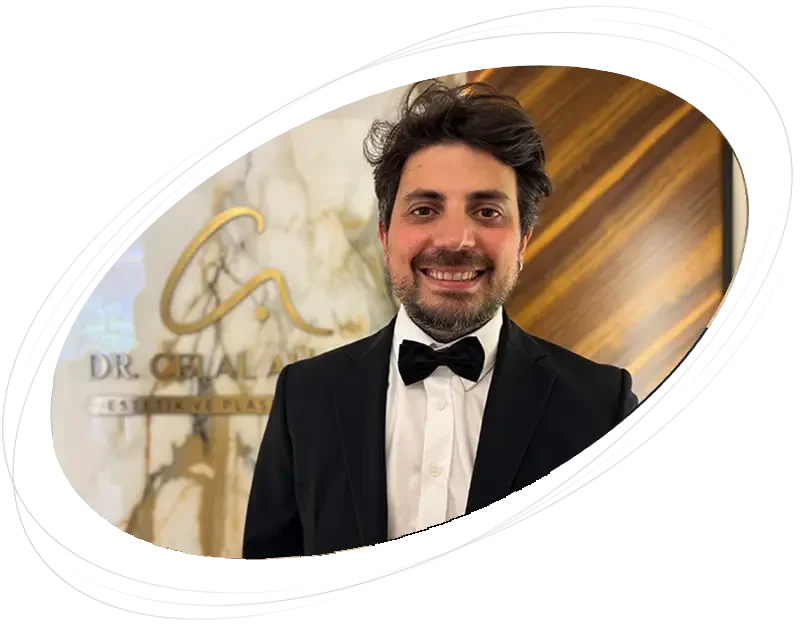
Dr. Celal Alioğlu, MD is a plastic and aesthetic surgery specialist. He works in his own private clinic. An active member of national and international professional associations, Dr. Alioğlu is in constant communication with his colleagues and closely follows the latest developments in his field. He also regularly attends national and international congress courses to increase his knowledge and experience.
More About Dr. Celal+