The Role of Cartilage Grafts in Revision Rhinoplasty
If you have undergone a primary nose job and are unhappy with the outcome, you are not alone. Dealing with unexpected results such as a drooping nasal tip, a collapsed bridge, or severe asymmetry can be incredibly frustrating. Under the guidance of Dr. Celal Alioglu, discover how secondary nose surgery utilizing specialized cartilage grafts can safely rebuild your nasal structure, restore breathing functions, and help you reclaim your confidence.
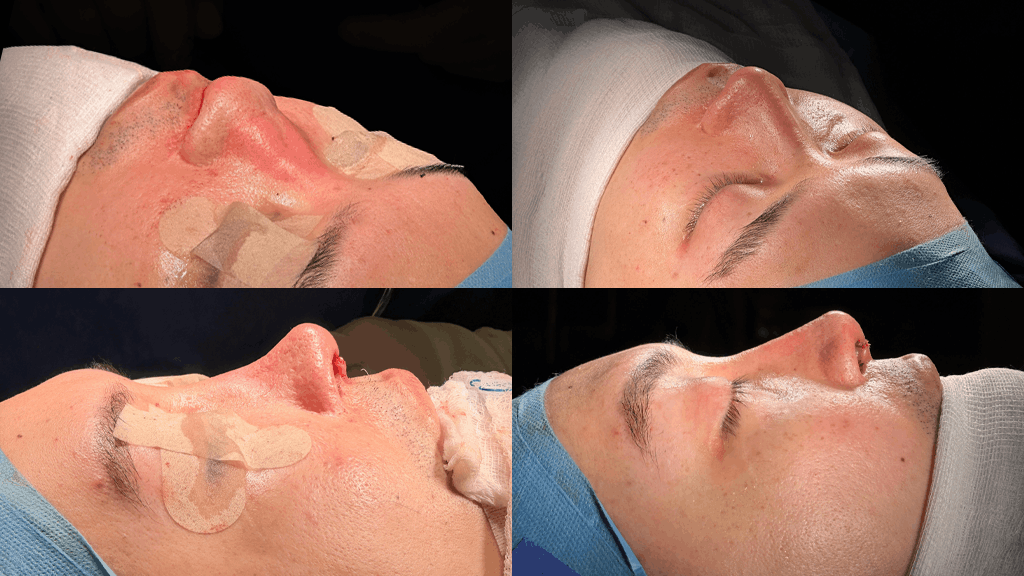
A common misconception about rhinoplasty is that it is purely a procedure of reduction or making the nose smaller. In reality, your nose is a complex architectural structure. If too much cartilage and bone are removed during a primary surgery, the roof of the nose loses its support. Over time, the skin contracts, the framework collapses, and the nasal airways often become blocked.
A cartilage graft is a piece of healthy tissue taken from one part of the body and transplanted into the nose. In revision rhinoplasty, grafts act as the foundational building blocks. They are used to rebuild a collapsed nasal bridge, project the nasal tip, open the breathing passages, and restore structural integrity. Without these grafts, a compromised nasal framework simply cannot hold its shape.
[Visual/Video Integration: Insert an anatomical photo or video of a pre-op collapsed nose structure here to visually demonstrate the need for structural support.]
Not every revision nose job requires harvesting cartilage from your ear or rib. If your primary surgeon did not completely exhaust the cartilage inside the middle of your nose (the septum), or if you only need minor touch-ups like fixing a slight asymmetry or a small contour irregularity, we can often use the remaining septal cartilage.
Septal cartilage is the absolute gold standard for rhinoplasty. It is naturally straight, strong, and already located within the surgical field. If you have enough of it left, Dr. Celal Alioglu will use it to reinforce your nasal structure without needing to make incisions elsewhere on your body.
[Visual/Video Integration: Insert a video/photo showing healthy septal cartilage being harvested from inside the nose and used for a millimetric correction during surgery.]
What happens if your septum was completely removed or severely damaged during your first surgery? For moderate to severe revision cases, we must look for alternative cartilage sources to rebuild the nose safely.
[Visual/Video Integration: Insert one of Dr. Celal Alioglu’s popular focus videos showing the meticulous, millimetric slicing of rib cartilage in the operating room, treating it like a work of art.]
More than half of the procedures performed in our clinic are complex revision rhinoplasties. Because we witness the devastating effects of over-resected, weakened noses daily, Dr. Celal Alioglu’s approach is strictly rooted in Structural Rhinoplasty. We do not believe in the structurally weak, over-reduced, artificial look that collapses years later. Whether it is your first surgery or your fourth, our philosophy is to preserve and fortify. By maintaining an excellent cartilage balance in primary surgeries, our own revision rate remains exceptionally low. When we do perform revisions for patients coming from other clinics, our goal is to build a strong, lifelong foundation that ensures you will get the healthy results you deserve.
[Visual/Video Integration: At the bottom of the post, insert a slider photo (Before / 1-Year Post-Op) or a patient experience video of a patient who achieved a completely natural profile using septal or rib grafts.]
No, rib cartilage is not mandatory for every revision rhinoplasty surgery. If you only require minor contour adjustments or if there is sufficient septal cartilage remaining inside your nose, Dr. Celal Alioglu can complete the structural reconstruction without harvesting extra tissue from the rib or ear.
Not at all. When harvesting an ear cartilage graft for a secondary nose job, the tissue is taken exclusively from the inner bowl of the ear. The incision is hidden discreetly in the natural crease behind the ear, ensuring that your ear shape, structure, and hearing functions remain completely unaffected.
Autologous rib cartilage graft provides an abundant, exceptionally strong, and biocompatible material for complex revision nose surgery. It is ideal for reconstructing a completely collapsed nasal bridge or correcting severe structural asymmetry, ensuring a sturdy framework that will not warp or droop over time.
The cost of a revision rhinoplasty involving cartilage grafts depends on the complexity of the reconstruction, the source of the graft (septum, ear, or rib), and hospital fees. Generally, revision rhinoplasty prices in Turkey range between $5,000 USD and $10,000 USD, which often includes all-inclusive packages covering VIP transfers and luxury accommodation.
While the initial swelling and bruising resolve within 10 to 14 days, a revision nose job requires a longer healing marathon compared to primary surgery. The reconstructed tissues and cartilage grafts may take up to 1 to 2 years to completely settle into their final, refined shape, though patients can easily return to daily activities within a couple of weeks.

Dr. Celal Alioğlu is a European board-certified specialist in plastic, reconstructive, and aesthetic surgery. Based in Istanbul, he combines international surgical standards with a refined, patient-centered approach for both local and international patients.
With memberships in leading global medical organizations and a commitment to continuous professional development, Dr. Alioğlu provides safe, ethical, and personalized surgical care.
More About Dr. Celal +